
This year during spring break, I visited Japan. If you’ve ever visited Japan, you know that the food is a major part of their culture; I probably spent at least 30% of each day either eating or looking at food their. Japan is an island off Asia in the Pacific Ocean, so their cuisine consists of mainly seafood, rice, pork, and beef (wagyu). In this post, you’ll read about the food and history behind it.
Seafood
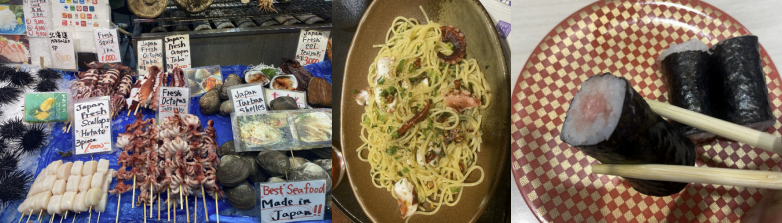
In Japan, I tried seafood for the very first time, as I was previously eggetarian (now pescetarian and occasionally eating chicken). I visited Uobei Shibuya Dogenzaka, which is conveyor belt sushi. I ate California roll, cucumber, and salmon sushi. At first, I was curious about raw fish and if it’s safe or not; but their fish is kept at very low temperatures, handle it with care, killed in a certain way, and is very fresh.
While walking around the street stalls, many shops were selling octopus. Seeing life octopus being handled so casually almost gave me a heart attack. I definitely was not going to eat live octopus, but we did visit a Japanese-style pasta restaurant. I ate octopus spaghetti, which had small chunks of it scattered, and it was delicious; 10 out of 10.
Matcha
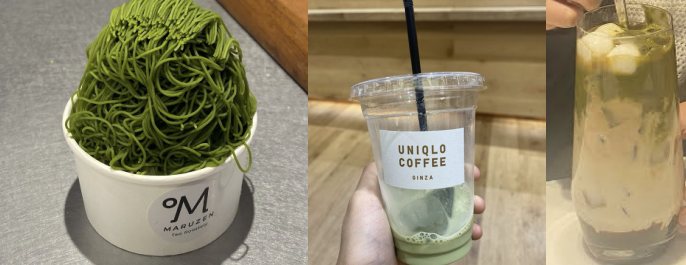
Matcha is a type of green tea, originating in China during the 7th-10th centuries. The tea leaves were steamed, dried, and made into blocks. The fine powder was whisked into water to make the drink. Buddhist monks drank it for its calming and energizing effects. A Japanese monk (Eisai) visited China and brought matcha tea seeds back to Japan, popularizing the drink in Japan.
At first, the taste is vivid and tastes strongly of… grass. But the more you drink it, the better it gets. Putting matcha in milk, ice cream, or chocolate keep the flavor noticeable but not too strong and grassy. I ate Mount Blanc ice cream, latte, mochi, and chocolate, all with matcha.
Bakery/ Sweets
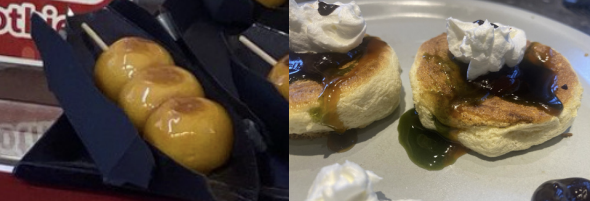
In Japan, you’ll be able to find a bakery everywhere. This was surprising, because baked items isn’t traditional in East Asia. But the history behind bakeries in Japan make a lot of sense. After WWII, there was a rice shortage, leading to more wheat consumption. This normalized bread in their diet. In modern Japan, the high-speed urban lifestyle requires quick, filling food rather than time-intensive meals. The food has also been adapted to traditional Japanese diet, like shokupan (milk bread), curry bread, and red-bean paste breads. My favorite bakery items were Tokyo Banana (banana cream in bread), chocolate-filled bread, parawufa (fluffy pancakes) and cheese filled bread.
For sweets, rice is an essential staple in Japan, so many Japanese sweets are centered around that. They boil rice flour to make dumplings, and then coat/fill it with different toppings. I ate dango, which are rice dumplings covered in sweet soy sauce. Mochi is also pretty popular. It is made by steaming mochiko flour, and is then pounded until extremely stretchy. I ate matcha mochi and red-bean mochi.
Ramen/ Noodles
Like matcha, ramen was also originally a Chinese wheat noodle dish called shina soba. In the 1880s, Chinese immigrants brought the dish to Japan, and it was favored by the working class for being cheap and filling. It was adapted to Japanese taste by making the broth creamier, shaping noodle differently, and adding meat, especially pork. After WWII, ramen became a staple comfort food on this island.
On my trip, I didn’t get a lot of options for ramen as I can’t eat pork or beef for religious reasons. The first ramen I tried was at Vegan Ramen UZU inside teamLab Planets, and it was so creamy and delicious. I tried another vegan ramen somewhere else and really disliked it. I wish I enjoyed ramen more in Japan, but it was overall okay.
What I Took Home
I took 4 bags of interesting-flavored KitKats. I really liked the matcha, matcha latte, and strawberry flavors, but not the Sake flavor. I brought back matcha mochi and matcha chocolate, both very rich and delicious. Finally, I brought back gum and matcha powder. I’ve made a matcha latte every day since then. I got gum because it has such a flowery, fresh scent that is a refreshing alternative to mint. If you go to Japan, definitely try all of these items and open your culinary doors.